Immersive Marketing – Growing Under the Radar
Immersive marketing no longer dominates the headlines. But that’s a sign that smart glasses and immersive experiences have gained a foothold in the marketing mix and are primed for growth. Let’s explore where immersive marketing stands today.

Swapping headlines for explosive growth
Unlike the much-discussed topic of AI, virtual and augmented reality aren’t stirring up much public excitement right now. However, the growth rates calculated by Grand View Research indicate that immersive experiences are performing incredibly well:
- The global market for immersive marketing was valued at an estimated US$6.9 billion in 2024. By 2030, it’s projected to reach US$29.68 billion – a compound average annual growth rate (CAGR) of 28.6 percent between 2025 and 2030.
- Experts predict that the European market for immersive marketing will achieve an even higher CAGR in excess of 29 percent over the same period.
- Germany is expected to surpass this figure with a CAGR of 30.2 percent. Experts anticipate that the market volume will reach US$1.8 billion by 2030.
Use cases for immersive marketing
VR and AR experiences have gained ground in modern marketing over recent years. Two specific use cases for immersive technologies have proven to be particularly significant.
Use case No. 1: AR applications for online stores
What will this sofa look like in my living room? Are these pants the right fit for my body shape? These kinds of questions are common among online shoppers and, for a few years now, AR has helped to provide answers. True to the slogan “try before you buy,” AR technology has achieved the long-awaited fusion of ecommerce and the in-person shopping experience offered by brick-and-mortar retail by displaying digital products in the user’s immediate surroundings.
Use case No. 2: Virtual brand worlds
In the metaverse and through their own virtual brand worlds, companies are forming direct connections with their customers. Want to create an unparalleled brand experience to retain existing customers or attract new ones who are open to interacting with your company? Consider hosting immersive brand experience events, for example.
Seeking inspiration from immersive experiences that are already out there? Discover a selection of best-practice examples in our story “Are Immersive Brand Experiences the Future of Brand Communication?”
When fashion meets tech: Stylish smart glasses
Smart glasses are one game-changing innovation that’s opening up access to immersive experiences for countless people every day.

Andreas Günter, Senior Consultant Mobile Strategy & Projects at Ströer Media Solutions and Deputy Chairman of the Immersive Experiences (IX) working group at the German Association for the Digital Economy (BVDW), also highlights the significance of immersive technologies:
“In 2026, AI and virtual worlds will be integrated into our smart glasses, merging reality and the power of imagination to create a new space in which ideas and information are not only visible but can also be experienced directly and interactively.”
Care for a quick refresher on what smart glasses are? They actually fall into two distinct categories of VR-enabled eyewear:
- VR headsets: These high-performance, although rather bulky, headsets are ideal for activities like gaming in 3D virtual worlds.
- Smart glasses: These innovative lightweight specs are suitable for everyday use and offer immersive experiences and live services on the go, including translation, taking photos and recording videos.
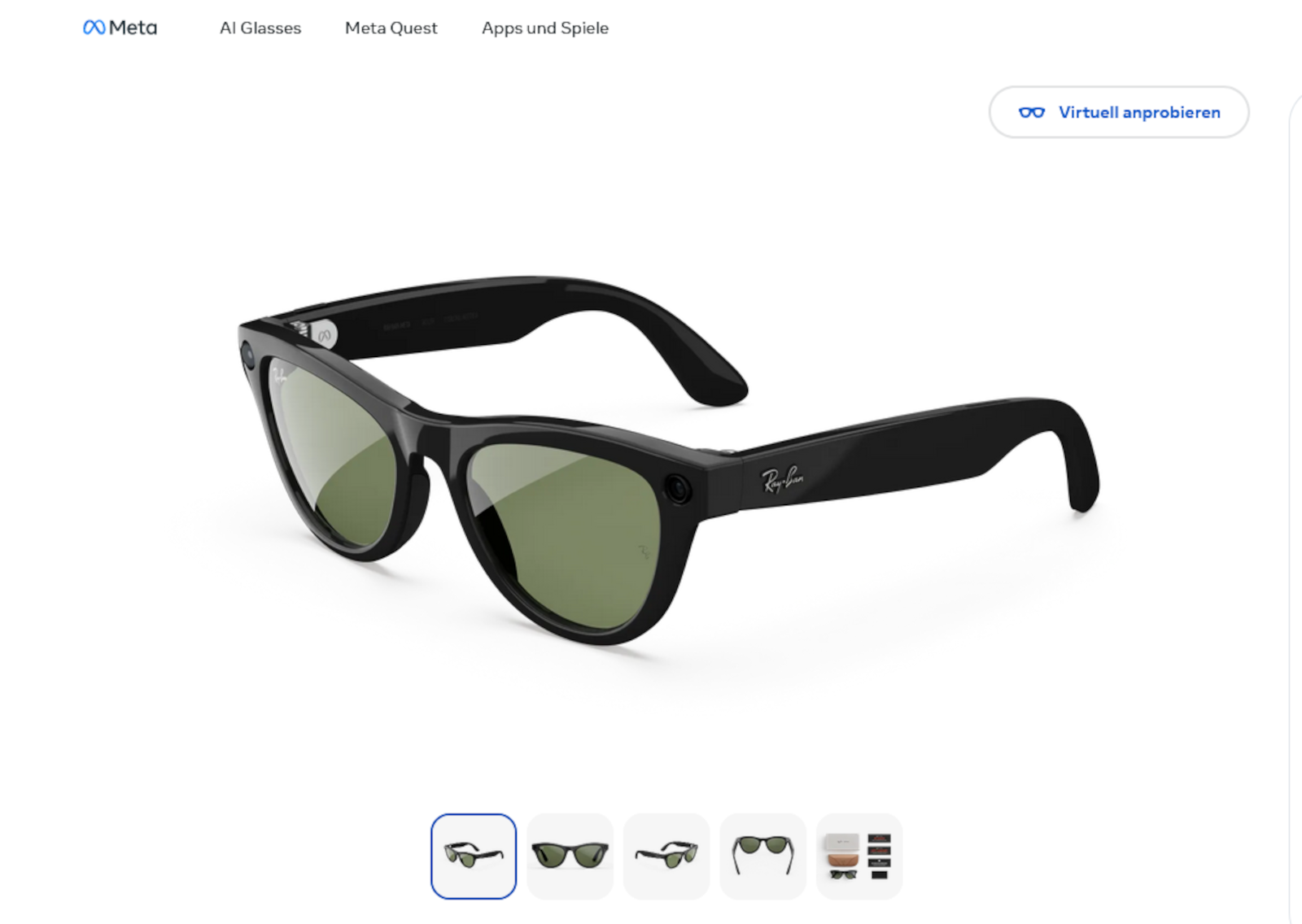
One outstanding, state-of-the-art solution for day-to-day use has emerged from the collaboration between Meta and Ray-Ban. For years, these top brands have been working together to develop smart glasses that satisfy both high technical requirements and demanding style standards. And, of course, potential customers can try on the wearable AI tech virtually in Meta’s online store!
How to leverage immersive experiences effectively
Immersive marketing shouldn’t be intrusive. It should blend naturally into the user’s world and enhance it by offering virtual experiences that fit with the user’s needs and preferences.
With this in mind, take note of these three guidelines when implementing immersive marketing measures:
- Treat immersive marketing as part of your overall marketing strategy: The key principle behind immersive marketing is to create seamless touchpoints between users and your brand.
- Be prepared to invest: AR allows users to see exactly how furniture will look in their homes or what items of clothing will look like on their bodies. Provide a high-quality solution and you give customers access to the ultimate decision-making tool. By increasing your conversions and reducing users’ purchasing mistakes, immersive marketing applications can therefore produce a win-win situation.
- Fine-tune your funnel: Immersive experiences involve commitment, so make sure users are at a suitable stage of the conversion funnel. AR features are hugely valuable to users already seriously considering making a purchase. For example, immersive experiences work well on landing pages that users actively visit via CTAs.
Top tip:
One way to make immersive marketing deliver results for your brand is to harness the power of interactive storytelling. To learn more about what this is and how it works, check out our article “Interactive Storytelling: Gamification and Storytelling Marketing.”
Takeaway: Immersive marketing is quietly gaining ground
Immersive marketing is becoming an increasingly common part of the marketing mix for digital brands. While it may be making fewer headlines, the figures speak for themselves – with annual growth rates of around 30 percent, the market continues to develop dynamically. AR features in ecommerce, virtual brand worlds and smart glasses for everyday use are proof that immersion has become a reality for marketing strategy, opening up a wide range of opportunities for you as a marketer.


Thanks to his experience in the agency sector and clear, effective communication, he is able to quickly recognise customer needs and respond to them in a targeted manner.