Platformization in B2B Commerce: From Stores to Ecosystems
Offering millions of products without having to store them in your own warehouses? Platformization is opening up new opportunities for growth, additional revenue sources, and access to valuable data for B2B companies.
Quick recap: What is platformization?
“Platformization” describes the transition from a conventional online store to a digital ecosystem. A platform business model means that companies no longer sell their own products exclusively. Instead, they open their platform up to third-party suppliers, outside services, and additional partners. This creates ecosystems that expand the range of offerings, create further revenue sources, and bring suppliers, purchasers, and services together on a joint platform.
Why platformization differs in B2B commerce
Looking at the B2C sector shows how fundamentally platforms can change markets. Companies such as Amazon, Uber, and Airbnb do not merely sell products or services. Instead, they organize entire markets and guide interactions between various actors.
Something similar is happening in B2B commerce. However, the process is slower for various reasons: complex procurement processes, individual pricing structures, long-term customer relationships, and the larger investments required. But it is precisely this complexity that often makes platform business models so stable and sustainable in B2B commerce. Once a platform has been integrated into existing purchasing and procurement processes, many companies will be slow to switch their provider.
Why platformization is gaining traction in B2B commerce
Several developments are strengthening the trend for platformization in the B2B marketplace simultaneously:
- B2B buyers today expect the same digital convenience that they are familiar with in their private lives: self-service, transparent prices, up-to-date information on availability, and quick search tools. They don’t want to go to ten different supplier portals – they want to cover as many needs as possible in one place.
- At the same time, purchasing is going digital. Companies are increasingly adopting digital procurement systems, automated ordering processes, digital tendering, and integrated procurement platforms. This doesn’t mean that conventional sales talks are disappearing completely. Rather, they are increasingly taking place alongside multiple digital touchpoints.
- Data has become the crucial raw material. Platforms live off product data, supply data, stock information, prices, and usage information. The more structured and up to date this data is, the more valuable the platform becomes.
How is AI changing B2B commerce?
Artificial intelligence is also transforming how companies buy and find products. AI systems are already supporting various procurement tasks: searching for suppliers, comparing quotes, forecasting demand, and decision-making.
In the conversation about the next stage in this shift, one word keeps cropping up: “agentic commerce.” The new generation of AI systems goes beyond merely preparing purchase processes. In some cases, they can even trigger or execute them independently. Agentic commerce in the B2B marketplace is still in an early stage. But many companies are already using AI agents as assistants within existing systems. This is fundamentally transforming the requirements in commerce.
Today, products need to be visible to more than just people – AI purchasing agents, search agents, and procurement AIs need to be able to “see” them as well. Going forward, any business that wants to be found and considered by AI systems will need high-quality product data and the right technical infrastructure. This means that having structured product data, standardized interfaces, up-to-date stock information, and high data quality is becoming more and more important.
Examples of platformization: Amazon and Unite
Two examples clearly show how platformization is already taking shape in B2B commerce.
#1: Amazon Business
Amazon Business applies the e-commerce giant’s B2C marketplace model to B2B customers. Companies benefit from an extensive selection of products and standardized ordering processes. Plus, they’re able to cover numerous needs via one central platform.
This example shows how platformization makes reach and range scalable. Instead of offering its own products exclusively, Amazon Business is constantly expanding its offering through third-party merchants. This creates a digital ecosystem that brings buyers and sellers together.

#2: Unite
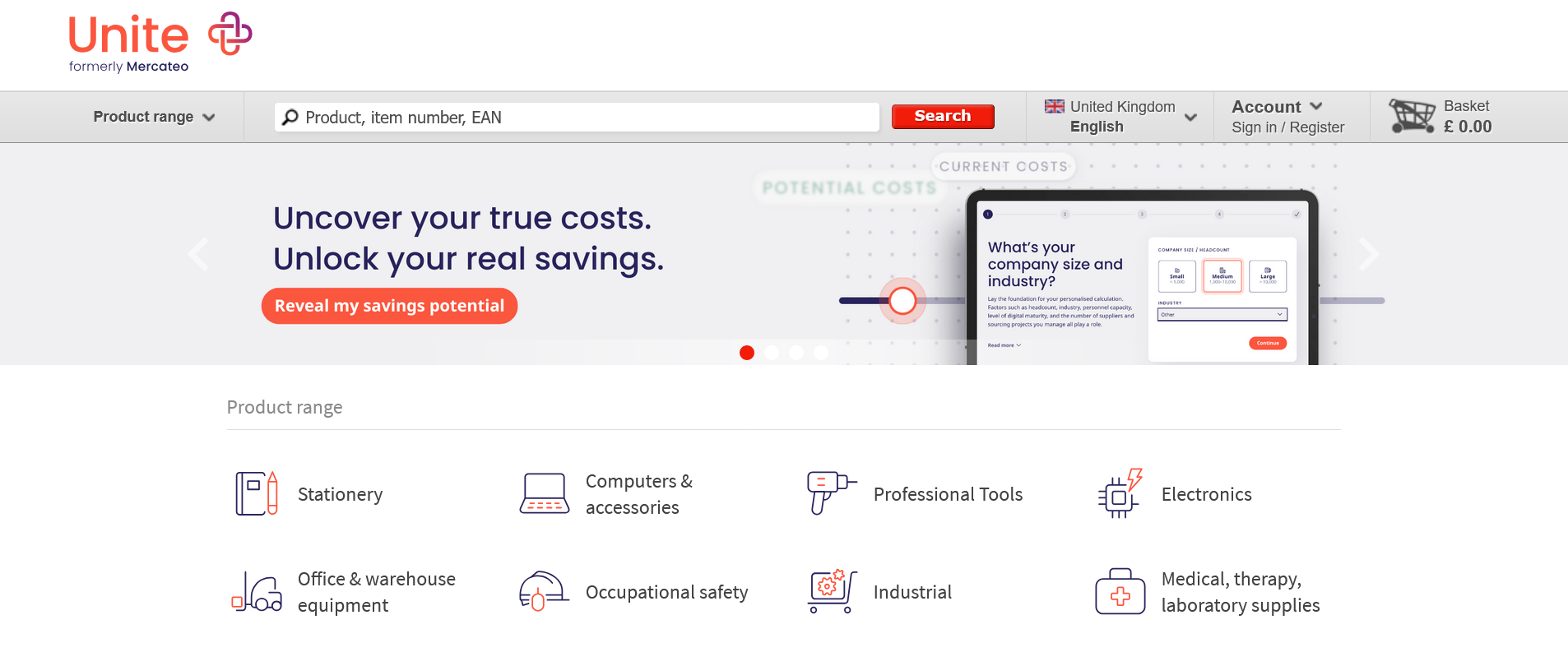
Unite, previously known as Mercateo, connects buyers with numerous prequalified suppliers and integrates procurement processes into existing organizational workflows.
Unlike Amazon Business, offering the largest selection of products is not Unite’s primary objective. Instead, it focuses on connecting existing procurement processes. This example demonstrates that platformization in B2B commerce isn’t just about creating online marketplaces. It’s about digitally integrating purchasing, suppliers, and processes.
Opportunities for companies in the platform economy
For many companies, platformization is first and foremost a growth strategy. It enables them to expand their range, reach, and business model without having to provide every service or stock every product themselves.
- Growth: Platform business models open up new fields for growth. They create additional revenue sources, such as platform fees, digital services, data products, or add-on services.
- Reach: Marketplace platforms provide access to new customer groups, enable international scaling, and facilitate faster market development.
- Efficiency: Standardized processes lower distribution costs, reduce the overhead and effort associated with manual workflows, and accelerate transactions.
- Risk minimization: Merchants minimize their storage risk, for example. Instead of stocking 500,000 replacement parts themselves, they can now list millions of articles supplied by third-party merchants.
However, the biggest lever lies in the platform business model itself. More suppliers make a platform more attractive; more buyers attract more suppliers. Once this cycle is in place, it creates a competitive advantage that’s hard to replicate.
The risks of platformization
The emergence of platforms changes power dynamics. Companies selling on third-party platforms in B2B commerce may benefit from additional reach. But they also relinquish part of their control over customer access, data, and visibility. Tim Böker, CEO of Gartenhaus.com, discusses this issue in our series “Beyond Checkout: Leading Minds in Commerce” on the future of ecommerce.
Another risk is the pressure on margins. When products are easy to compare, the focus on price, delivery times, and availability becomes even more intense.
Added to this is the loss of direct customer relationships. The platform becomes the central touchpoint. As a result, manufacturers and merchants often have less direct contact with their customers.
One particularly significant question is the issue of data sovereignty. Who will own the most valuable information about buying behavior, demand, and market trends? The answer to this will determine the power dynamics and value creation in the platform economy in the long term.
Looking ahead: Platformization is strengthening commerce media
The more transactions, search inquiries, and purchase data converge on a platform, the more valuable it becomes as an advertising environment. As a result, platformization and commerce media are increasingly growing hand in hand. Jan Schmitz (Zalando), Retail Media x AI Lab Lead within the Retail & Commerce Media Ecosystem Working Group at the German Association for the Digital Economy (BVDW), emphasizes this point:
“The platformization of B2B commerce is laying the groundwork for the next stage of growth in commerce media. When wholesalers and manufacturers open up their stores to third-party suppliers, it creates specialized online marketplaces with valuable first-party data and important purchase signals – and this will be the basis for new media and monetization models.”

The takeaway: Platformization is driving B2B commerce
Platformization is more than just a new business model. It is the engine behind the migration of value creation, data, and customer access to digital ecosystems. At the same time, it is creating new opportunities for AI, commerce media, and data-driven services. For businesses, this means they will need to decide early on what role they want to play in this shift.
How to scale and leverage these developments will be one of the key questions at DMEXCO 2026, where the industry will gather to discuss its this year’s motto, “Scaling Intelligence.”
Don’t miss any important news from the world of digital marketing, both nationally and internationally! Subscribe to the new DMEXCO newsletter “Digital Digest” and receive the latest information directly in your mailbox every Monday, Wednesday, and Friday.