CMO Steffen Zeller on Rügenwalder Mühle’s Bold Marketing
Almost a year after our first conversation, Steffen Zeller, Rügenwalder Mühle’s Chief Marketing Officer, speaks with us about regulatory obstacles, the power of traditional branding, and why transformation always takes courage.
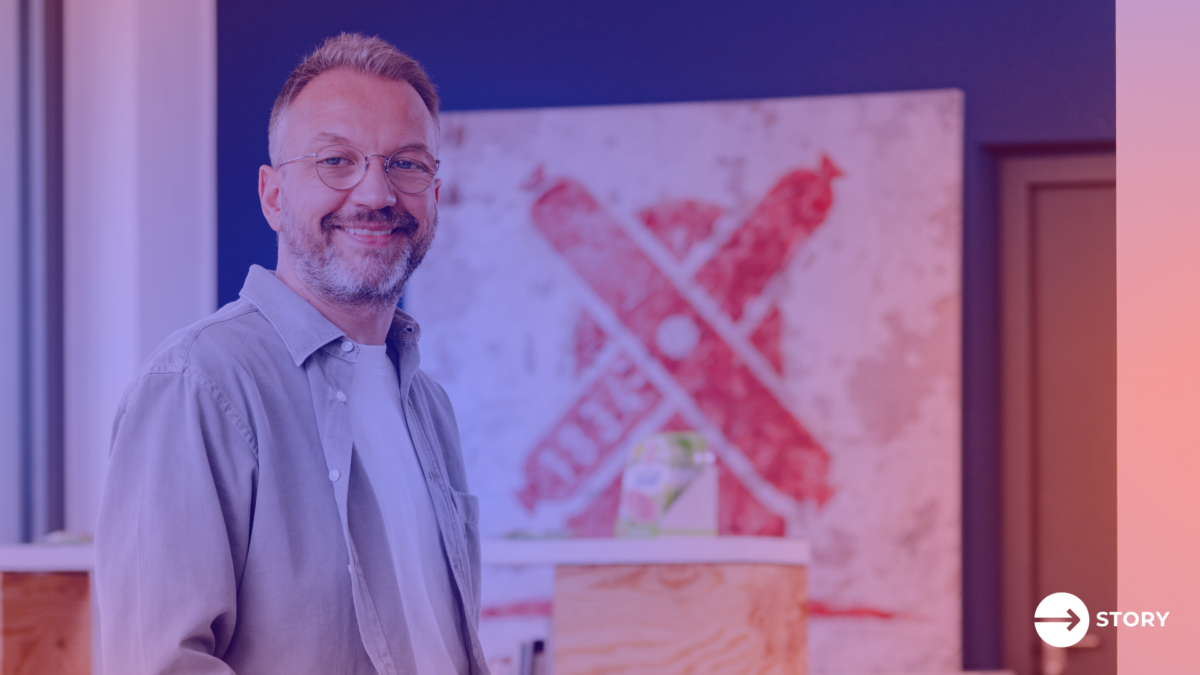
How Rügenwalder Mühle’s bold marketing strategy is shaping the market
Last year, Steffen Zeller shared insights into the fundamental tenets of his marketing philosophy as part of our series “Insight Out: Marketing’s Boldest Voices.” A lot can happen in one year. So it’s high time that we checked in with him again and asked what’s driving him now and what he would view differently today and why.
In the following interview, Rügenwalder Mühle’s CMO explains why the impending EU name ban has the industry on tenterhooks, the product innovations that stem from community insights, and why a strong culture of error is the basis for faster transformation.
Which strategic assessments that you made last year would you reevaluate today – and why?
The market for vegetarian and vegan meat alternatives experienced sustained and strong growth from 2019, which was particularly noticeable at the high point of the Fridays for Future movement and during the coronavirus pandemic. At the time, we hadn’t expected such a market dip and the slowdown in growth that we’ve seen in recent years.
The war in Ukraine and its repercussions are not the only cause. It’s also down to the fact that the market has matured. It stagnated at +0.1 percent in 2025. And yet we’ve still been able to grow by 4.6 percent over the same period. We’ve managed to increase our market share by almost 2 percentage points, and we’ve achieved a share of sales of 42.2 percent. Investing consistently in our brand and our innovation leadership is the only way we’ve been able to achieve that.
As Rügenwalder Mühle, we aren’t dogmatic – we want to bring everyone together around the table. I think the results show one thing: That our strategy works. And it’s our great strength.
What decision has proved to be much more complicated to implement than you originally thought?
This year and last year, the impending name ban has made some things more complicated than we had hoped.
But it’s not a decision that we took but rather a potential EU-wide ban on using certain descriptors such as “sausage” or “schnitzel” for vegan and vegetarian alternatives. As Rügenwalder Mühle, we clearly positioned ourselves against the ban from the outset because we think that the established names already provide enough orientation and clarity for consumers.
That’s also backed up by various studies. What the ban will ultimately look like exactly hasn’t yet been finalized; the EU is still ratifying it. But fortunately, a ban on “burger” and “sausage” seems to have been ruled out. So now we have to wait and see, and then weigh up the consequences.
At the end of last year, we said that an outright ban could cost the whole industry around 250 million euros. That’s now rather unlikely to happen, but still, any additional restrictions would be fatal!
What do many companies underestimate in the balancing act between branding and growth?
You need to invest in your brand even during crises in order to generate continued growth. For me, it’s very clear that it’s not just about performance marketing. To generate long-term growth, you need traditional branding. We build genuine trust through a consistent presence and brand values. That’s how we’ve been able to stand out from other brands and grow.
Which KPI was the clearest indicator for you that the mass market is moving toward more plant-based foods?
The answer is very straightforward: penetration. We believed in the shift way back in 2014. We helped establish the market for vegetarian and vegan meat alternatives, and relatively quickly, that proved to be precisely the right decision. They were exactly the products that consumers were looking for, and they bought them when we put them on the market. Although the market is currently stagnating, one in three households buys vegetarian and vegan meat alternatives. For us, that is the clearest KPI when it comes to the shift.
Which insights from your customers’ daily lives have ultimately led to tangible changes in your range?
This is another area where our consumers provide us with the most important insights. For years, we’ve known that one of the most wanted products is a vegan alternative to wet-cured ham. We’ve been working on it for a long time. But it was clear to us that we couldn’t put out a half-finished product – it had to be really delicious and really good. That’s why it took some time. But in April, the big moment will finally arrive, and we’ll launch our vegan wet-cured ham – which will go by the name Veganer Mühlen Kochschinken – along with two varieties.
On the other hand, we’ve currently got our cooperation with Chio. We’ve brought our chicken nugget alternative, Crispies, and the original Chio tortilla seasoning together. The result is the Vegane Mühlen Crispies Chio Wild Paprika. Sadly, the category is still too often seen as a substitute for meat products. But it’s so much more.
As a brand, we want to embody pleasure, fun and ease, and I think brand collaborations are the perfect way to do that.
We’re delighted that our cooperation with Chio is working so well and that it has produced such a darn tasty product.
Which risks did you consciously take on board to speed up the transformation?
If you want to press ahead with the transformation, you need to be bold and curious. That’s how we’ve always been at Rügenwalder Mühle. In 2014, we were one of the first companies in Germany to produce vegetarian and vegan meat alternatives. We opened an office facility in Hamburg and acquired and built another production location in Goldenstedt.
Transformation and innovation are part of our identity. But it’s not just about having the courage – it’s also about having a living culture of error. Because mistakes are part and parcel of it, and you can learn from them.
Of course, you can always ask yourself what you could do if something isn’t working. But I like to look at it differently: What can you do when something is working and when it’s doing really well? That’s a much nicer way of looking at things, and it’s a question of mindset. After all, if you think like that, you’re increasing the probability that you’ll truly succeed in the end.
Rügenwalder Mühle’s bold marketing pays off
If you want to grow in saturated or stagnating markets, staying in touch with your own community is absolutely essential. Rügenwalder Mühle’s bold marketing shows that consistent branding, a clear position, and products developed in response to genuine user needs are the key to sustainable growth in market share. Having the courage also means investing the time in product development until the result meets your own expectations – and consumers’ – completely.
You can find our previous interview with Steffen Zeller, Chief Marketing Officer at Rügenwalder Mühle, here.
Don’t miss any important news from the world of digital marketing, both nationally and internationally! Subscribe to the new DMEXCO newsletter “Digital Digest” and receive the latest information directly in your mailbox every Monday, Wednesday, and Friday.