Online Marketplaces: The Ultimate Ecommerce Strategy?
Online marketplaces account for 57 percent of German ecommerce sales. At the same time, AI and agentic commerce promise to be the next big ecommerce trends. But which developments are truly strategically relevant? Expert Jan Griesel has the answers.
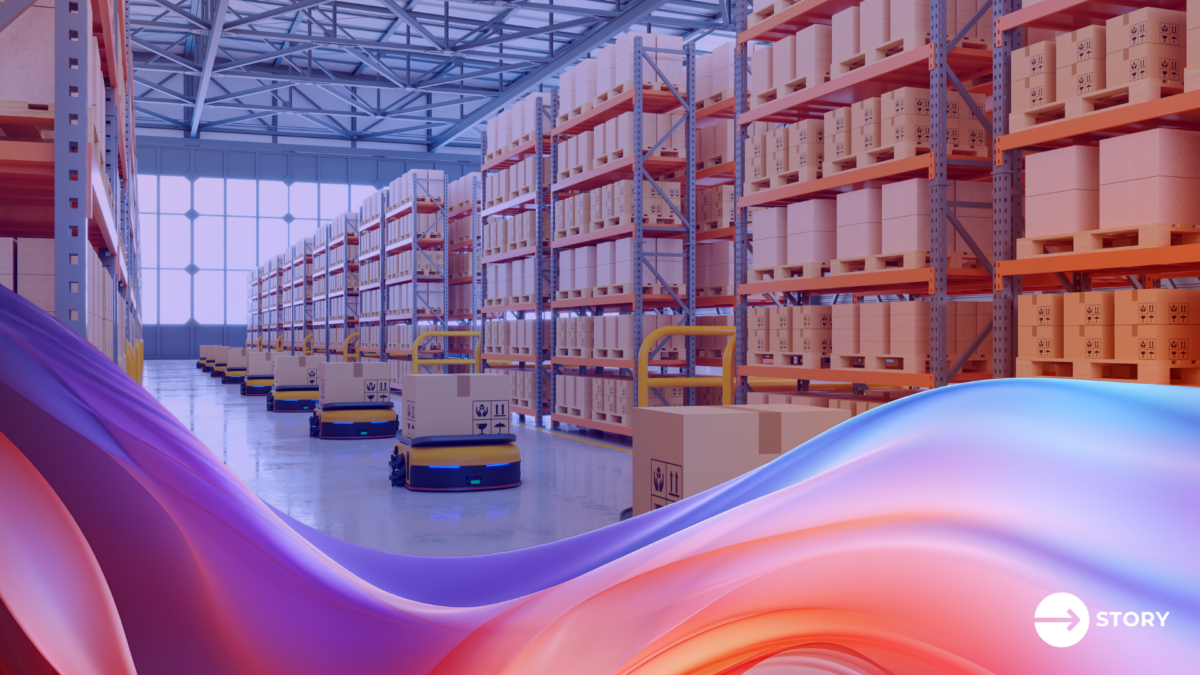
Ecommerce marketplaces: The new frontier
Online marketplaces are attracting more and more sales. At the same time, AI is transforming how retailers work, market products, and reach customers. Companies need to keep up with these developments – without losing their way by jumping on every new trend.

Jan Griesel can provide some guidance: As the founder behind the all-in-one ecommerce ERP solution PlentyONE, he has years of experience tackling the challenges of multichannel commerce. On a daily basis, he sees how retailers are approaching new platforms, innovative AI tools for ecommerce, and changes in market conditions. He is therefore ideally placed to assess which ecommerce trends are having a real impact today and what companies should focus on in the years to come.
Which ecommerce trends will transform the sector the most in the coming years?
The figures paint a clear picture.
According to the market barometer HDE-Online-Monitor 2025, 57 percent of German online sales already take place on ecommerce marketplaces. Amazon is still the biggest by some margin, but other platforms are growing, too. The direction is clear: More sales are being completed on platforms. Ignore this and you’ll lose reach. But follow the trend blindly and you’ll sacrifice margin and control. The answer is an intelligent marketplace strategy with a strong presence on the right channels.
Today, AI tools for ecommerce are delivering measurable efficiency gains in customer communication, data analysis, and content production. This isn’t a far-off vision of the distant future – it’s already a daily reality. By contrast, agentic commerce still isn’t a real prospect in Germany because the lack of a suitable platform infrastructure and regulatory uncertainties are hampering development. But any business that gets its data and system foundation ready for AI agents today will have a head start tomorrow.
The takeaways: Platform consolidation is the clearest long-term trend. AI is the biggest efficiency lever. Agentic commerce is what companies should start preparing for now.
What’s the best marketplace strategy: Establishing a platform or using platforms?
Having your own platform sounds attractive, but reality advises against it.
Achieving the critical mass is the problem: A platform without enough users has no value. And users don’t want to check out a hundred different platforms. They opt for the few online marketplaces that genuinely offer them something.
As a result, in the mainstream market, a small number of very strong platforms dominate. They’ve got the power to invest, the reach, and the infrastructure. Competing with them takes money and time, and hardly anyone has the resources. But there’s one exception: the niche market. If you truly understand a narrow target group and cater to their needs systematically, you can survive even as a smaller platform – and be profitable. In this scenario, relevance matters more than reach.
For everybody else, it’s a different story: Don’t set out to become a platform. Instead, ask yourself: “How can I take my business to the platforms where my target group is already present and active?” That’s precisely the approach that we take at PlentyONE: helping retailers choose the right platforms for their marketplace strategy and create a stronger presence on them than their competitors.
Looking at AI tools for ecommerce, which use cases have already made it into everyday practice?
AI is making inroads in ecommerce where the pressure is greatest: on the cost side.
The general economic climate is forcing retailers to achieve more with less. At PlentyONE, that is determining where AI is applied first in daily operations.
- We’re already using it for: AI-powered customer service to automate responses and rapid data analyses – AI can identify strengths and weaknesses without wading through reports for hours.
- We’re trialing: marketplace-specific optimization of product information, automated product data submission, intelligent sales price strategies, and AI agents that help retailers simplify complex processes in ecommerce automation.
- The rule of thumb we follow is this: no AI for AI’s sake. Instead, we focus on tools that actually save time, eliminate errors, and reduce the operational workload.
That is what will ensure our customers’ success in the long term, and that’s the difference between a pilot project and real use in everyday practice.
H3: Which ecommerce trends are currently overrated in your view – and which ones are underrated?
Overrated: agentic commerce – at least today. The excitement is understandable, but it’s too soon for the German market. We still don’t have the dominant big platforms that enable AI agents to truly reach their potential. But that can change, and then agentic commerce will really live up to its promise.
Underrated: The fact that using AI requires expertise instead of replacing it. A good example is marketers: Those who master the craft know how AI tools for ecommerce can be used intelligently. And they can achieve really outstanding results with them. But not everyone is going to be automatically more successful simply because they have access to the same tools. AI strengthens existing skills. It doesn’t create them. This is underestimated on an enormous scale, and it has implications for training, recruitment, and the question of how we evaluate investments in AI.
The special role that people will play in the AI era is something that Bastian Siebers, CEO of flaconi, recently highlighted in his DMEXCO interview.
What should retailers focus on over the next five years?
Build the foundation today that will give you flexibility tomorrow.
We live in dynamic times with new ecommerce marketplaces, new technologies, new opportunities for ecommerce automation, and new regulations. If you don’t have a good grip on your foundations, you’ll be hit by every single change instead of benefiting from them. But flexibility doesn’t mean being everywhere. The most common mistake that we see is retailers going so broad that they are no longer genuinely strong anywhere. Interchangeable, indistinguishable, no defining features.
The right path lies in between the two poles: having multiple functioning sales channels and a clear product range, but with focus. In multichannel commerce, a business that performs really well on two or three channels will beat those that are average on ten channels. And it’s the operational foundation – data quality, automation, integrated processes – that makes two things possible in the first place: stability today, adaptability tomorrow. It’s not a sprint. It’s work that will pay off in the years ahead.
Online marketplaces: How to use them without becoming dependent
Our interview with Jan Griesel reveals one thing: Not every ecommerce trend has the same strategic relevance. While online marketplaces are continually expanding their influence and AI is already delivering measurable efficiency gains today, agentic commerce remains a distant vision of the future for the time being.
The crucial thing is therefore not to chase every trend. Successful retailers concentrate on the channels where they really perform well, invest in data quality, and create the framework that will enable them to respond flexibly to new developments.
Because ultimately, it’s not the companies that are present everywhere that will win. Instead, the winners will be those businesses that leverage their resources with a targeted approach, harness their strengths effectively, and use online marketplaces as a tool without becoming dependent on them.
Would you like to exchange ideas face-to-face with leading industry experts? Then get your ticket for DMEXCO 2026, visit the World of Commerce, and attend the exciting sessions at the DMEXCO Commerce Summit – powered by BVDW.