DMEXCO Column: Employee Advocacy: Visibility Booster With High ROI
A DMEXCO column by Evgeny Popov on the opportunities and advantages of employee advocacy on LinkedIn.

It’s high time: Employee advocacy in the B2B sector on LinkedIn
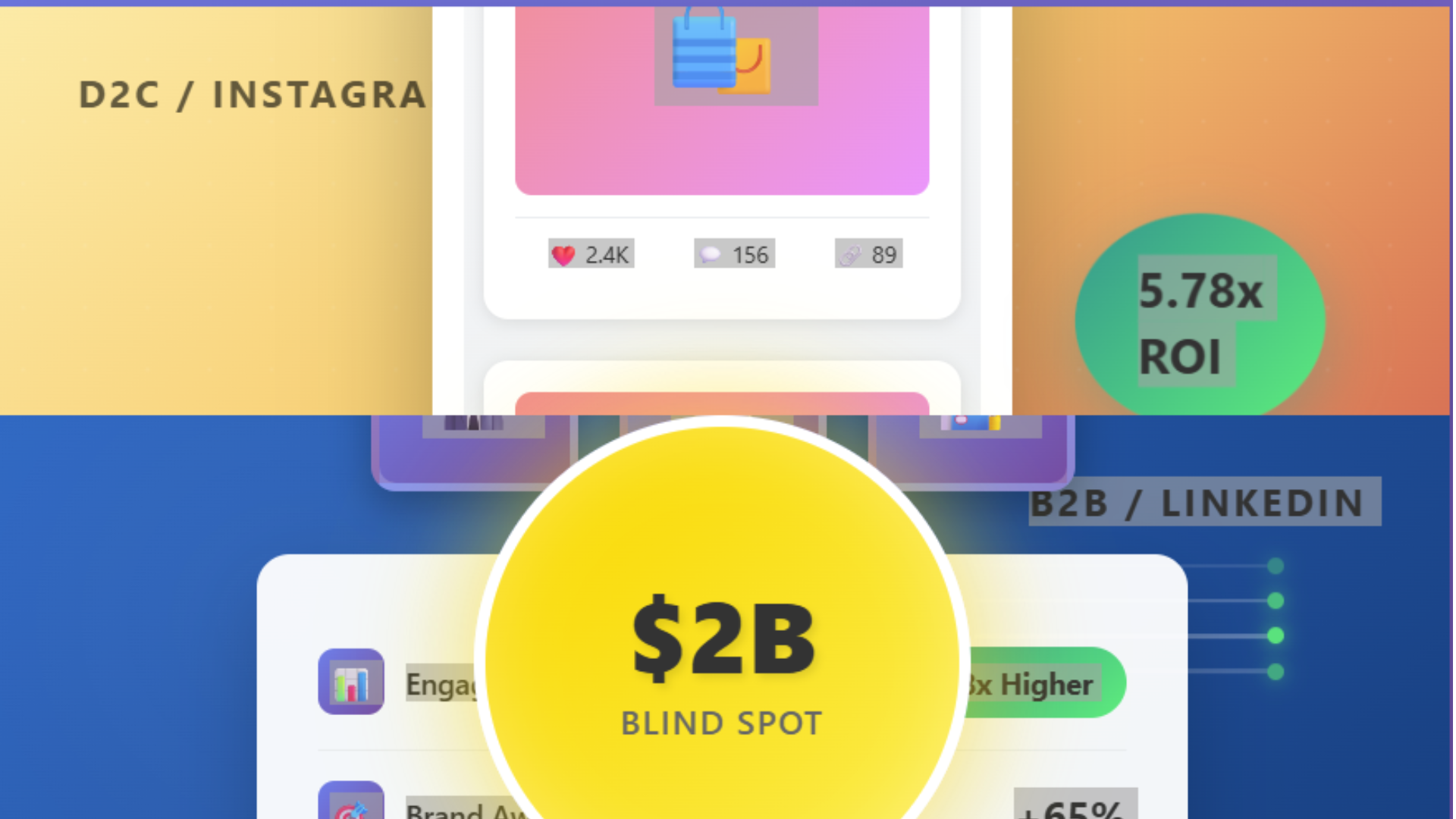
Direct-to-consumer (D2C) brands have turned Instagram (IG) into an always-on sales engine, and the numbers prove it. For every dollar spent on Instagram influencer marketing, brands generate $4.12 in return, with a median ROI of $5.78 across the industry. Nano-influencers with under 10,000 followers see engagement rates around 1.73 percent, using genuine reviews and discount codes that influence 49 percent of consumers’ purchase decisions. Campaigns are wired into launches, optimized for conversion, and tracked to every swipe-up. This is not experimentation. The influencer marketing industry was worth $24 billion in 2024 and is expected to hit $32.55 billion by the end of 2025.
Status Quo: B2B Influencing on LinkedIn
Meanwhile, most B2B organizations sit on a similar asset and barely touch it: LinkedIn plus the voices of their own people. Employee profiles reach the exact buyers marketing teams pay to target. LinkedIn hosts 65 million decision-makers and 10 million C-level executives, and 82 percent of B2B buyers review LinkedIn profiles before accepting a meeting. Yet few companies treat this as a managed channel. The question is simple: why hasn’t B2B adapted the influencer model to LinkedIn?
The 20-Year Thought Leadership Plateau
Thought leadership still matters, guilty as charged, bad habits die hard! Executive bylines, research reports, and conference keynotes signal expertise. They reassure risk-averse buyers, and 90 percent of B2B decision-makers say thought leadership is important. But the model is straining under today’s feed-driven attention economy.
Bylines often circulate within the same small circle of insiders. Whitepapers collect form fills, not real discussion. Conference panels create visibility for a day, not momentum for a quarter. Corporate social channels fight declining organic reach and algorithmic bias toward people, not logos. LinkedIn’s average engagement rate sits around 3.85 percent, yet content from individuals routinely achieves 5-10 percent+ engagement, more than double the corporate average. Much institutional content feels polished, sanitized, and safe.
This machinery was built for an era of scarcity, when access to publishing and stages was the moat. The goal was authority over accessibility, positioning over participation. It is not broken. It is simply incomplete in a world where B2B buyers are already 57 to 58 percent through the buying process before they speak to sales, and where influence is earned in the feed, not only from the podium.
The Direct Parallel: Instagram D2C vs. LinkedIn B2B
Mapping Instagram’s D2C playbook to LinkedIn makes the B2B gap obvious, and the opportunity quantifiable.
- Micro-influencers (10k-100k followers) → Employee subject-matter experts with focused networks. On average, employee networks have 10x more connections than a company has followers, yet they remain largely untapped.
- Authentic product reviews and “in the wild” content → Client success stories, implementation notes, and project retros from delivery teams. Around 80% of business decision-makers prefer getting brand information via articles rather than ads.
- High creator engagement rates → Even stronger employee content performance. Content shared by employees receives roughly 8x more engagement than the same content shared by brand channels, easily beating Instagram’s 1.73 percent nano-influencer benchmark.
- Audience targeting by demographics and interests → Native targeting by job title, function, industry, seniority, and even named accounts through employees’ networks. LinkedIn members have about 2x the buying power of the average web audience.
- Creator partnerships managed like a media line item → Structured employee advocacy programs, run with the same rigor as paid social. An advocacy program with 1,000 active participants can generate an estimated $1.9 million in advertising value at roughly one-tenth the cost of paid media.
- Clear performance metrics: reach, engagement, conversion → Brand equity, share of voice in target accounts, deal influence, and social-selling lift. Leads developed through employee advocacy convert up to 7x more frequently than other leads.
The twist: approximately 80 percent of B2B leads generated from social media come from LinkedIn. Users who see a business’s content on LinkedIn are 6x more likely to buy from that brand. Yet many vendors still treat employee content as “extra” instead of a core distribution layer.
The Measurable Opportunity: Brand Equity and Awareness
Employee-driven influence is not a vanity play. It is a measurable growth lever that can outperform Instagram benchmarks on a relative basis.
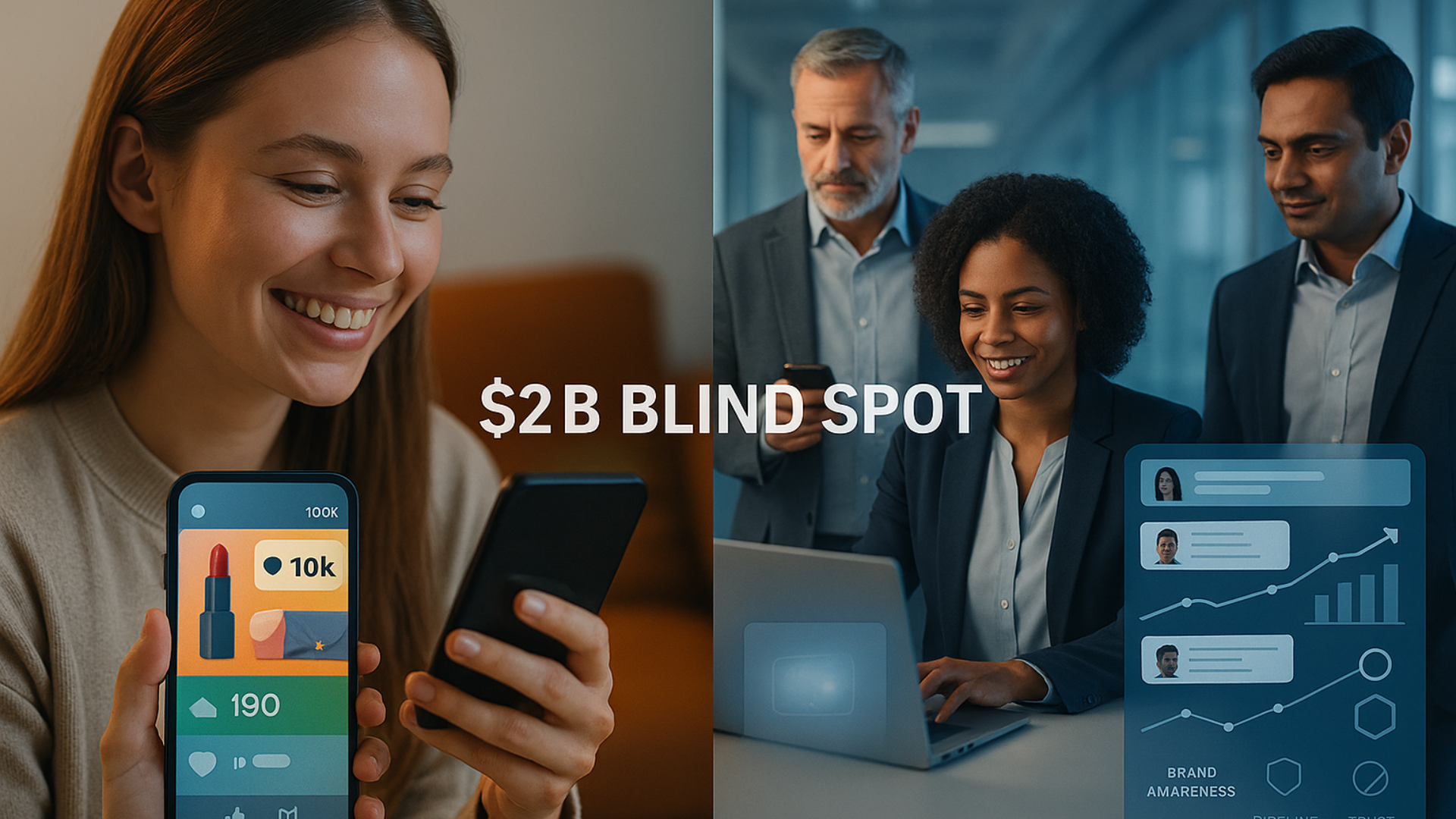
Posts from individuals routinely earn 8x more engagement than identical content from corporate accounts, a multiplier that, in any performance channel, would trigger budget reallocation. Around 65 percent of companies report increased brand recognition after launching formal employee advocacy programs. Those with structured programs see stronger brand awareness, higher website traffic, and faster revenue growth.
Employees are responsible for roughly 30 percent of their company’s overall engagement on LinkedIn, yet represent 100 percent of the potential. Employee-shared content has a 3-5x higher click-through rate (CTR) than other content, and formal advocacy can drive up to 5x more web traffic.
Companies Profit from Employee Advocacy
For B2B brands, this engagement comes from people who matter: 65 million decision-makers, budget owners, and 10 million C-level executives. Eighty-two percent of B2B buyers review LinkedIn profiles before accepting meetings, and 82 percent say creator content influences their purchase decisions. Every interaction is a trust signal in the right graph. People are 3x more likely to trust company information shared by an employee than by a CEO.
Over time, employee voices shape key outcomes, brand recall in your category, inclusion in shortlists, and shorter sales cycles because prospects “know” your people before the first call. When employees share content, it can generate 561 percent more reach than brand channels, and LinkedIn’s social selling tools help sales professionals increase sales by up to 45 percent.
The Strategic Imperative: From Representatives to Ambassadors
Companies must change how they view their workforce on LinkedIn. The ROI case is now hard to ignore.
The old model says employees represent the brand. They list the company in their profile and occasionally like a corporate post. The new model says employees are the brand in the market. They publish, comment, and join conversations with a clear point of view, driving 8x more engagement and up to 7x higher conversion than traditional brand marketing.
Employee Advocacy Programs Provide Structure
That shift needs structure. Build formal employee influencer programs with clear expectations, training, and simple guardrails. In 2025, 72 percent of organizations with over 1,000 employees are scaling advocacy programs, and nearly 75 percent are prioritizing leadership involvement. Enable content; do not script it. Provide prompts, data points, and visual assets that people can adapt to their own voice. Recognize and reward employees whose content drives reach, engagement, or sourced opportunities.
Most importantly, connect this activity to core marketing and revenue metrics. D2C brands justify a $32.55 billion influencer industry with a $5.78 return on every dollar spent. B2B brands can unlock comparable leverage: $1.9 million in advertising value from 1,000 engaged employee advocates at a fraction of paid media cost. When leaders see that empowered employees move brand metrics, generate leads that convert 7x more often, and create 8x more engagement than corporate content, the question will not be “Why should we do this?” but “Why did we wait so long?”