DMEXCO 2026, Day 1: When AI Meets Real Life
“Scaling Intelligence” is the theme of DMEXCO, and Day 1 made one thing clear: Scaling AI isn’t just about using more tools. What really matters is data, new workflows, and people who can turn technology into real value.
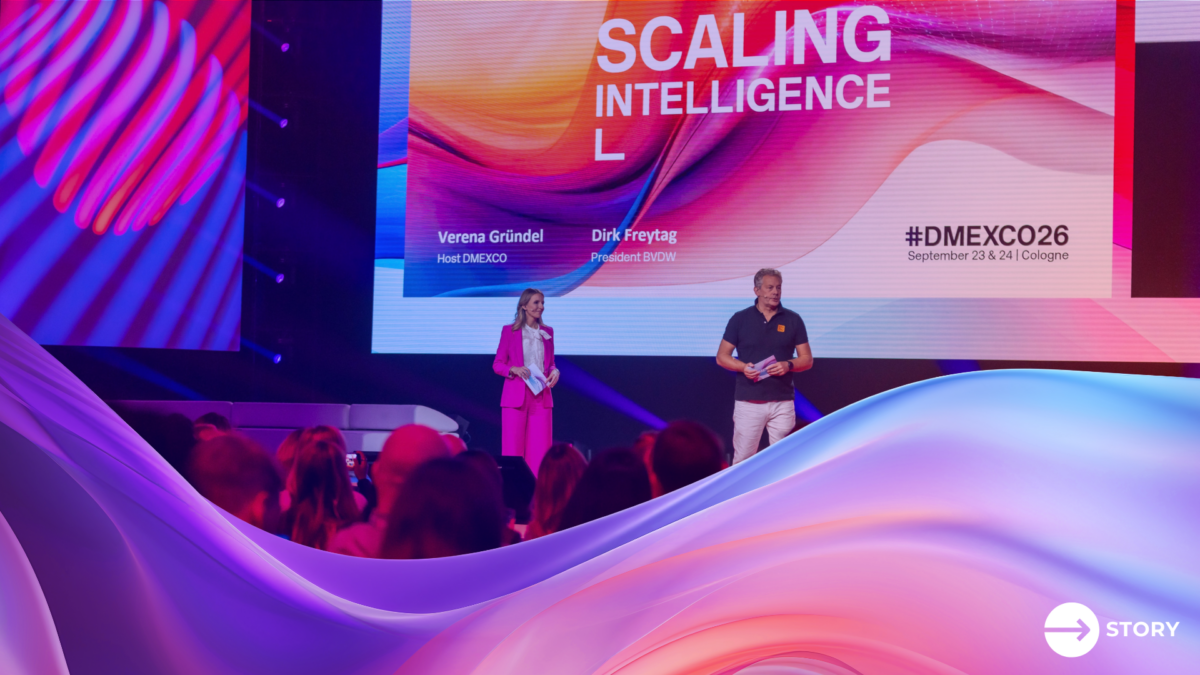
Scaling Intelligence: AI Needs Trust
“Welcome to DMEXCO!” As tradition has it, DMEXCO host Verena Gründel and BVDW President Dirk Freytag opened the conference under the theme “Scaling Intelligence.” Three topics set the agenda: AI as a Business Accelerator, Agentic AI & AI Commerce, and Trust & Strong Brands.
Over the past few years, everyone has done plenty of experimenting. Now it’s time to rethink workflows, develop a clear focus, and make AI a leadership priority. “We need a Human in the Lead, not just in the Loop,” Verena Gründel said. Scaling AI also means taking responsibility, Dirk Freytag emphasized, summing it up simply: “It’s all about Trust.”
AI Between Hype and a Turning Point on the Center Stage
Daniel Hulme, Chief AI Officer at WPP, explored how AI can transform seven key friction points in marketing—from segmentation and audiences to content and creativity, performance, channels, and reaching customers at exactly the right moment. He sees a particularly significant opportunity in Shadow AI. His message to leaders: actively encourage this innovative potential, tap into internal expertise, and bring strategic partners on board. After all, AI shouldn’t just make processes more efficient—it should free up human creativity.
Next, tech analyst Benedict Evans looked ahead with “AI Eats the World.” What AI will be capable of ten years from now is just as difficult to predict today as the impact of the internet once was. Everyone is talking about Agentic AI, but where that development will ultimately lead remains an open question. Benedict Evans also asked whether the enormous demand for AI will continue to grow faster than efficiency gains—or whether open models and falling costs will put today’s high profit margins under pressure.
Anyone rushing from the Center Stage to the Commerce Stage or their next masterclass then found themselves face-to-face with a friendly, giant humanoid robot that was more than happy to pose for photos.
What’s the State of Commerce in 2026?
One thing became clear on the Commerce Stage: Commerce is undergoing a power shift. Alexander Graf, Co-CEO of Spryker, summed it up in his lecture, “The State of Commerce 2026”: AI agents are changing the way we search and shop, while TikTok Shop and creator commerce are redefining where demand originates in the first place.
At the same time, China offers a glimpse of what may be coming next: new brands and ecosystems that seamlessly combine content, commerce, AI, payments, and supply chains. We also learned something else from Alexander Graf: Sometimes it’s cheaper to buy a solar panel from a Chinese supplier than a kitchen countertop from a home improvement store. Tongue-in-cheek, perhaps, but still a striking illustration of just how much the market is shifting.
Our tip for anyone still on-site tomorrow: Stop by the Commerce Lounge. Podcasts are recorded live there, and you can sit right next to the action. And if a session leaves you with a question, “Meet the Speaker” gives you the chance to talk directly with the speakers and dig deeper.
The “Trends in Commerce 2027” panel with Ian Jindal (RetailX), Victoria Canduela (Meta), Dan Glock (Shopify), Karo Junker de Neui (Etribes), and Clemens Bauer (REWE) took the conversation further. Discovery is shifting away from Google toward social platforms, messaging, and AI assistants. And with Agentic Commerce, an AI agent may soon sit between retailers and customers.
For that to work, clean data is essential. In the end, everyone agreed on one thing: It’s not the tools that make the difference—it’s the people using them. Or, as Clemens Bauer put it: “It’s all about the people.”
Beyond Reach: Brands Need to Become Part of Fan Culture
Whether it’s soccer or podcasts, how do you turn attention into genuine fan engagement? Oliver Bierhoff, entrepreneur in the global sports business and former German national team player, discussed the question with OneFootball CEO Patrick Fischer, DFB Vice President Célia Šašić, and Google Marketing Director Emily Henderson.
The conversation explored how brands can think of soccer as a 365-day ecosystem rather than focusing only on major tournaments—and why community matters. The discussion centered on new forms of fandom, the growth of women’s soccer, and how brands can become a lasting part of soccer culture.
Palina Rojinski, actress, host, and podcaster, and Riccardo Simonetti, entertainer, author, and podcaster, showed what that can look like in the creator economy. The hosts of Spotify’s video podcast “Saus & Applaus” took the stage to plenty of applause and talked about how consistent content can create closeness, rituals, and community—and how brands can authentically become part of it. If you couldn’t make it into the packed venue to see them live, you can catch the talk afterward in our VOD.
The common denominator: Don’t just chase reach around isolated peaks. Become relevant where fan culture happens every day.
85 Slides, Memes, and One Neuralyzer, Please
While the first champagne cork was already popping in Hall 6, tech blogger Sascha Pallenberg took to the Tech Stage with no fewer than 85 slides. Fortunately, they were packed with memes and visuals—and plenty of humor.
He took us through old and new social media phenomena in the endless hunt for likes. He used Moore’s Law to explain Intel and AMD. He showed just how massive data centers are compared with Manhattan. He highlighted the darker side of AI-generated imagery. And he explained how YouTube is being flooded with AI-generated videos.
In his own way, he also made the case for keeping the “Human in the Lead.” But there were plenty of positive examples, too: AI-generated POV videos transporting viewers back to the days of Troy. Real people with real talent. And a movie recommendation featuring Joaquin Phoenix.
We also got neuralyzed. A lot. Anyone who has seen Men in Black knows what we mean. For everyone else, consider that another movie recommendation.
And Sascha Pallenberg highlighted opportunities, too—opportunities for digital sovereignty, economic growth, and innovation made in Germany. His poetry slam alone would make this story way too long, but you can catch it in our VOD.
DMEXCO 2026: It’s All About the People!
Across conversations on the stages and between the booths, the human side of scaling was a recurring theme. New tools alone don’t create business value. So what does? The right data, new workflows, and, above all, people who are willing to bring AI into their everyday work in bold and meaningful ways.
That’s why even at the pre-parties, the conversation wasn’t just about specific use cases for AI and AI agents—it was also about the people behind them. How do we empower our teams? And how do we continue to create spaces for genuine human connection?
Because the more digital our processes, consulting, and commerce become, the more valuable personal interaction becomes—within our teams as well as with our customers.
And speaking of human connection: Riding scooters, jumping into a ball pit, and grabbing a beer have always been a good idea at DMEXCO. No AI required.